Free Shipping for all orders
 Secure payment
 Free Signature Gift Box
 Shop with confidence: encrypted shopping by Shopify


Quick answer: Safety razor blade gap is the distance between the edge of the blade and the safety bar beneath it. It sets how much hair can get into the cutting chamber, the space between the blade and the safety bar. A small gap lets only short hair in, so it suits a daily shave and sensitive areas like the neck. A large gap lets longer hair in, so it cuts a few days of stubble cleanly. Blade exposure is something different: how far the edge sticks out past the line from the cap to the safety bar. Gap, exposure and blade angle together decide how a razor feels. The Rockwell Razors SETPOINT™ adjustable safety razor lets you change the gap with a dial, even mid-shave.
What is the blade gap on a safety razor?
Look at a safety razor from the side. The blade is clamped between the cap on top and the base plate underneath. The base plate ends in a safety bar, a straight edge or a comb, that runs just below the blade. The blade gap is the distance from the cutting edge to that bar.
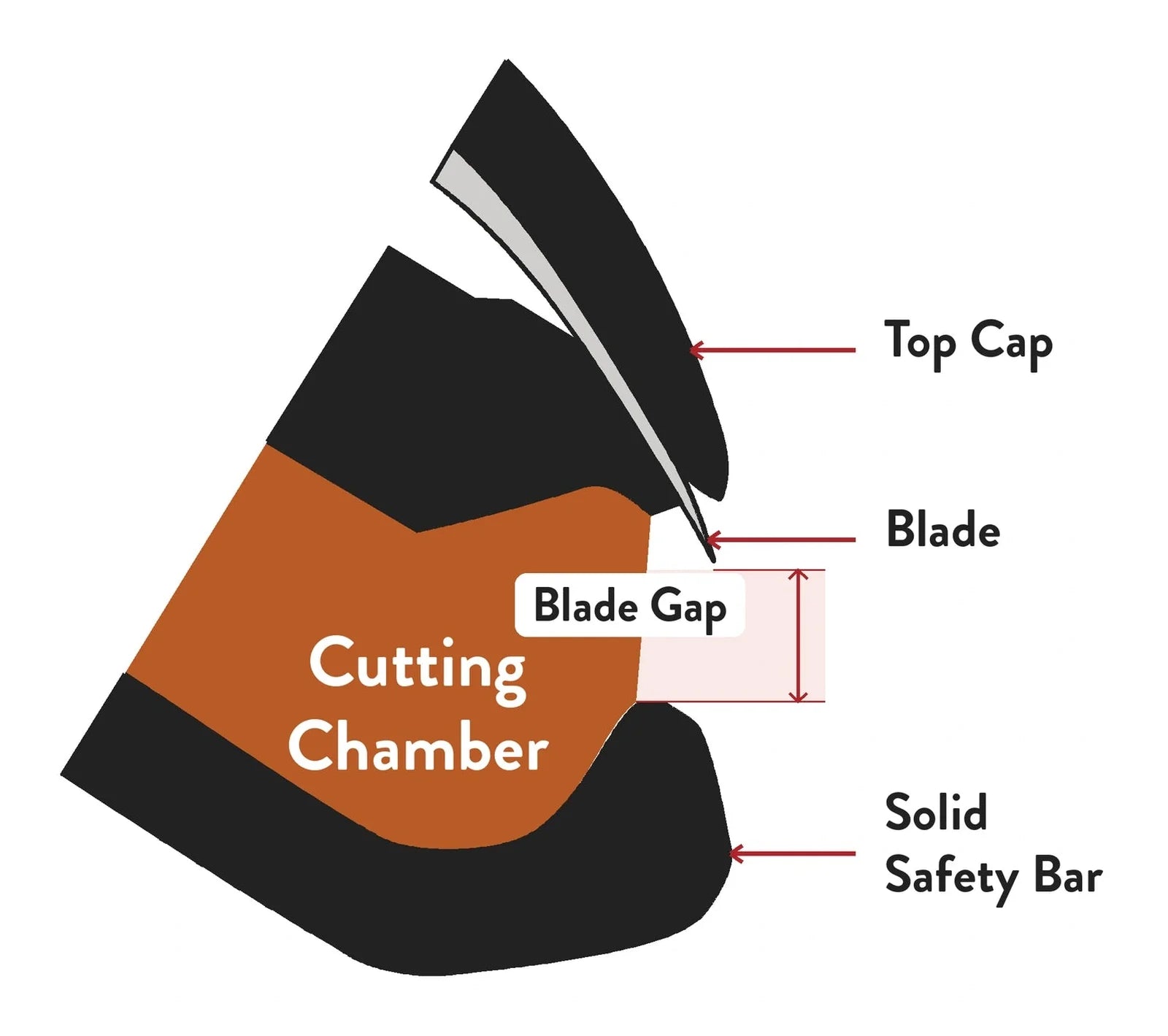
The gap is the opening to the cutting chamber, the space between the blade and the safety bar. Only hair that fits through the gap gets in and reaches the blade. That's why the gap changes how a razor feels so much.
- A small gap lets only short hair into the cutting chamber. It cuts short stubble cleanly and suits sensitive areas, but longer hair may need more passes.
- A large gap lets longer hair into the cutting chamber, so the razor clears a few days of stubble in fewer passes. On short stubble, it's more blade than you need.
What happens when hair meets the gap
Whether a gap works depends on the length of the hair trying to get into the cutting chamber. There are four cases.
- Short hair, small gap: the hair fits into the cutting chamber and gets a clean cut.
- Long hair, small gap: the hair can't stand up in the chamber. It gets pushed flat and the blade misses it, so you go over the same spot again or press harder.
- Long hair, large gap: the hair stands up in the chamber and the blade cuts it cleanly.
- Short hair, large gap: more blade than you need. With little hair to cut, the edge is more likely to meet skin and irritate it.
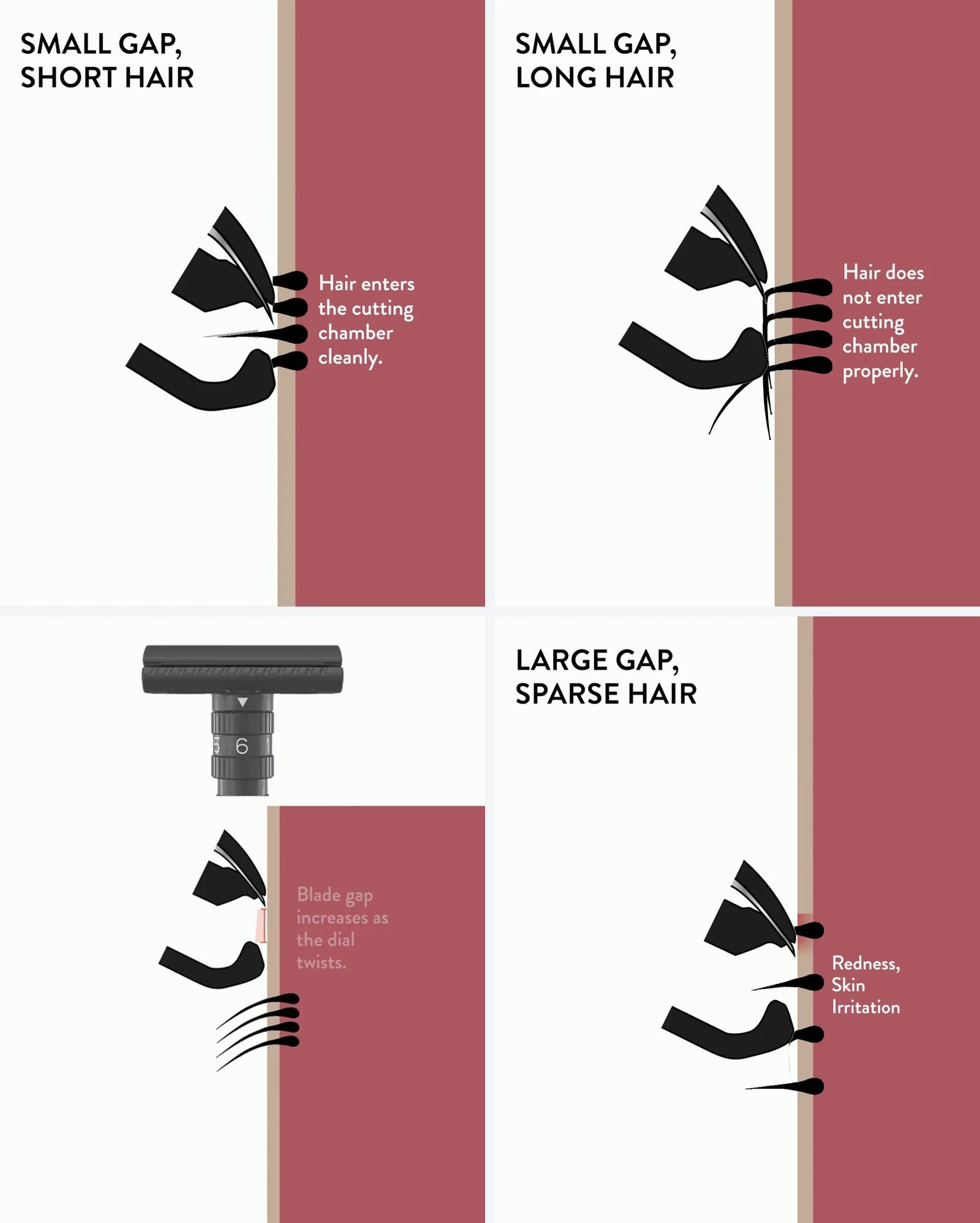
Match the gap to the hair, and you shave with fewer passes and less pressure.
Blade gap vs blade exposure vs blade angle
These three get confused all the time, partly because people use "gap" loosely to mean "how aggressive". They're separate measurements.
|
What it is |
What it changes |
|
|---|---|---|
|
Blade gap |
Distance from the blade edge to the safety bar |
How long a hair can get into the cutting chamber and reach the blade |
|
Blade exposure |
How far the edge sits above (positive) or below (negative) the line from the cap to the safety bar |
How much of the edge touches the skin; more exposure feels sharper |
|
Blade angle |
The angle between the blade and the skin, set by the head design and how you hold the razor |
How cleanly the edge cuts; too steep scrapes, too flat skips |
That's why you can't judge a razor on gap alone. A razor with a fairly open gap can still shave mild if very little of the edge is exposed, and a razor with a smaller gap and more exposure can feel harsher. It's also why gap figures don't compare cleanly from one brand to another.
Mild, medium or aggressive: rough ranges
There's no industry standard, but a common rule of thumb for gap is:
- Mild: under 0.60 mm
- Medium: 0.60–0.70 mm
- Aggressive: over 0.70 mm
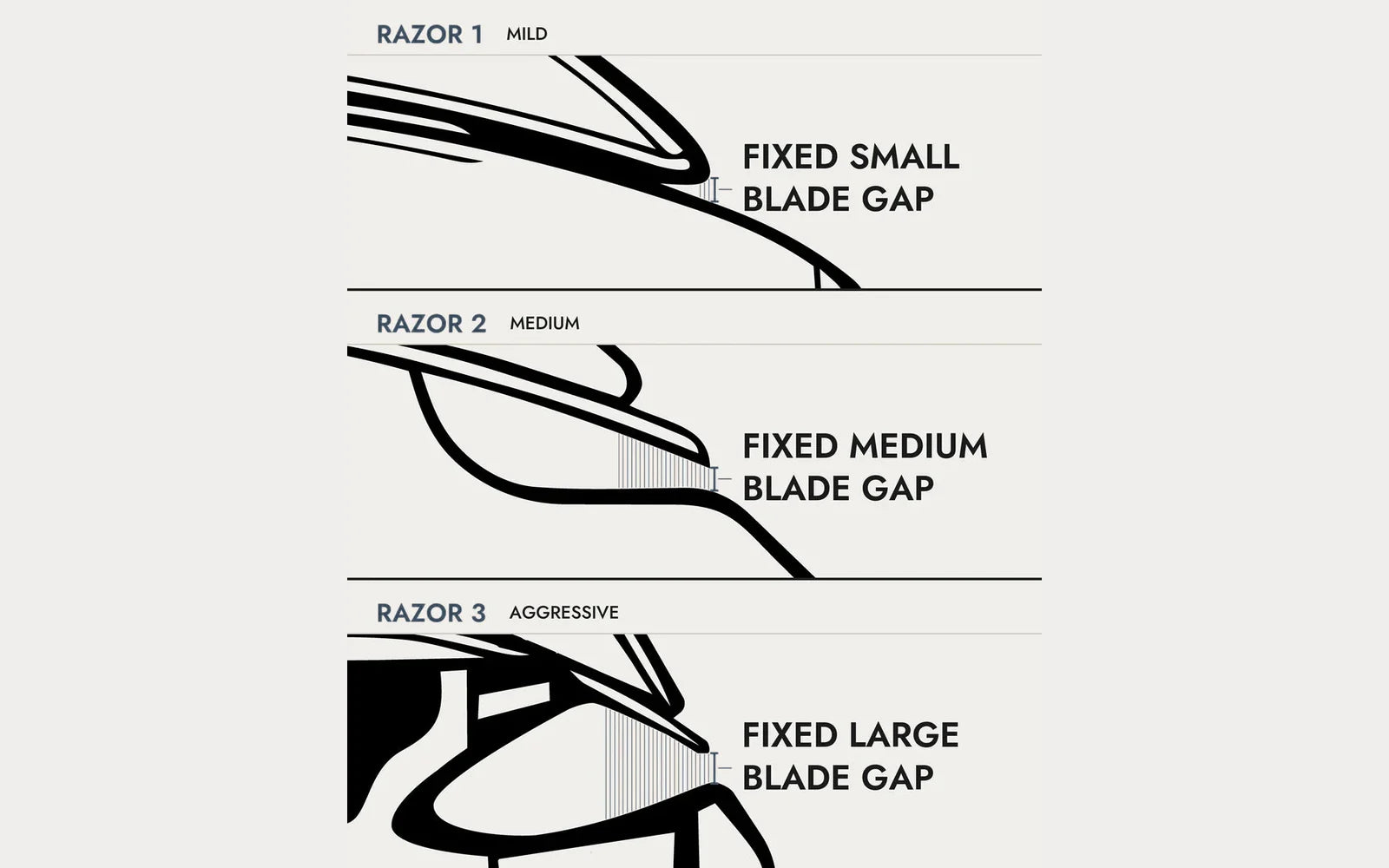
They're a starting point. Exposure, angle and how rigidly the head holds the blade all shift where a razor really sits.
Rockwell blade gaps, by model
Every Rockwell is adjustable. Here are the published figures.
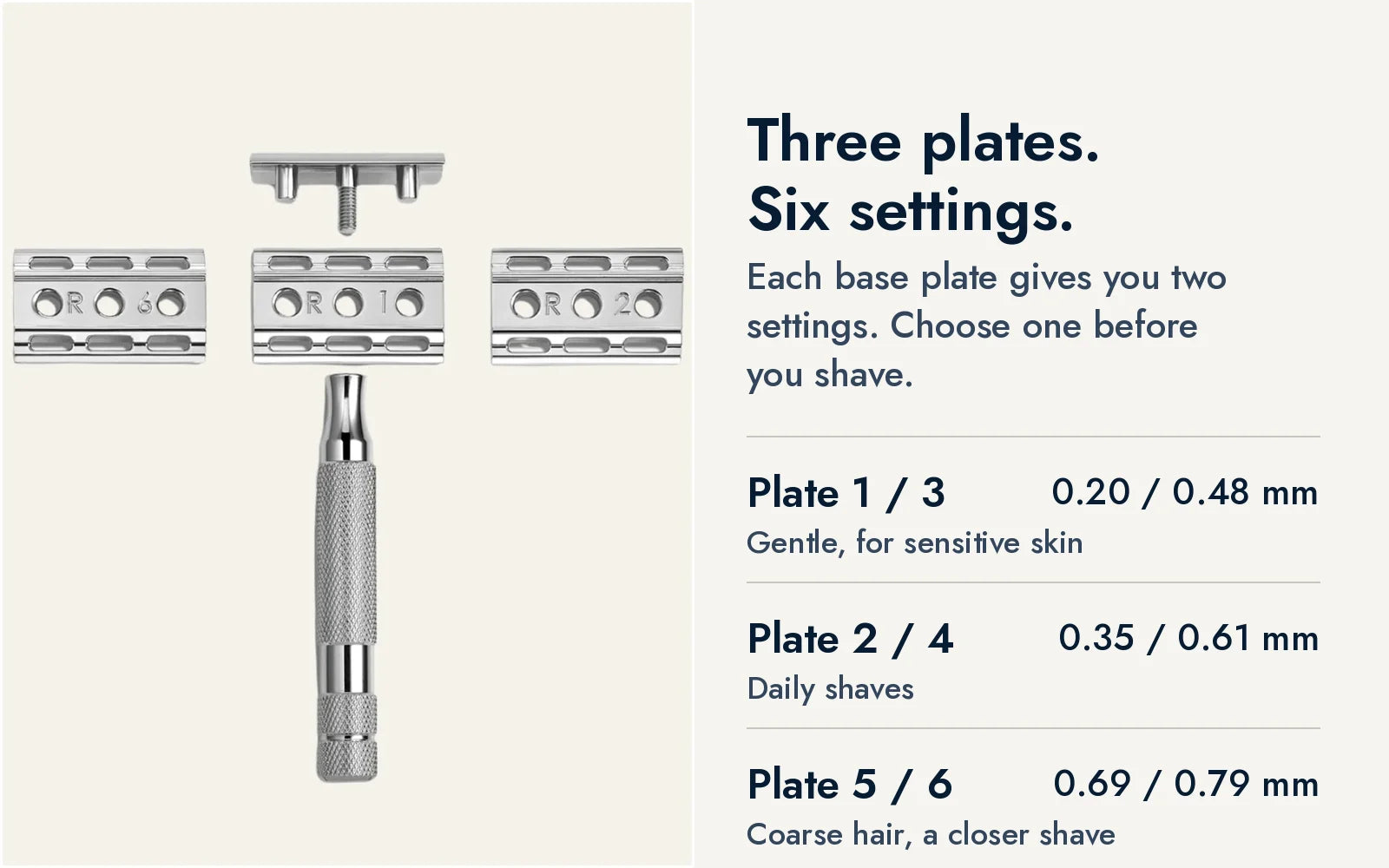
2C, 6C and 6S plates (from our FAQ):
|
Plate |
Gap (mm) |
Gap (inches) |
|---|---|---|
|
1 |
0.20 |
0.008 |
|
2 |
0.35 |
0.014 |
|
3 |
0.48 |
0.019 |
|
4 |
0.61 |
0.024 |
|
5 |
0.69 |
0.027 |
|
6 |
0.79 |
0.031 |
The 2C comes with plates 1 and 3 (0.20 and 0.48 mm).
SETPOINT™ dial (from the SETPOINT™ page):
|
Setting |
Gap (mm) |
Use it for |
|---|---|---|
|
1 |
0.30 |
Neck and sensitive skin |
|
3 |
0.62 |
Everyday: a day or two of growth |
|
6 |
1.10 |
Three days to a week of growth |
The Rockwell Razors SETPOINT™ adjustable safety razor is stepless, so you can stop anywhere between 0.30 and 1.10 mm. Gaps can vary slightly by finish.
Each model has its own gaps, so if you switch, don't assume your old number carries over. Start low and work up. For a model-by-model comparison, see which Rockwell is right for you.
Which blade gap should you use?
Match the gap to two things: the skin you're shaving and how long the stubble is.
|
1 day of stubble |
2–3 days |
4+ days |
|
|---|---|---|---|
|
Neck or sensitive skin |
Lowest setting |
Low, up one step if it drags |
Low to medium; trim very long growth first |
|
Chin and upper lip |
Low |
Low to medium |
Medium |
|
Cheeks and jawline |
Low to medium |
Medium |
Medium to high |
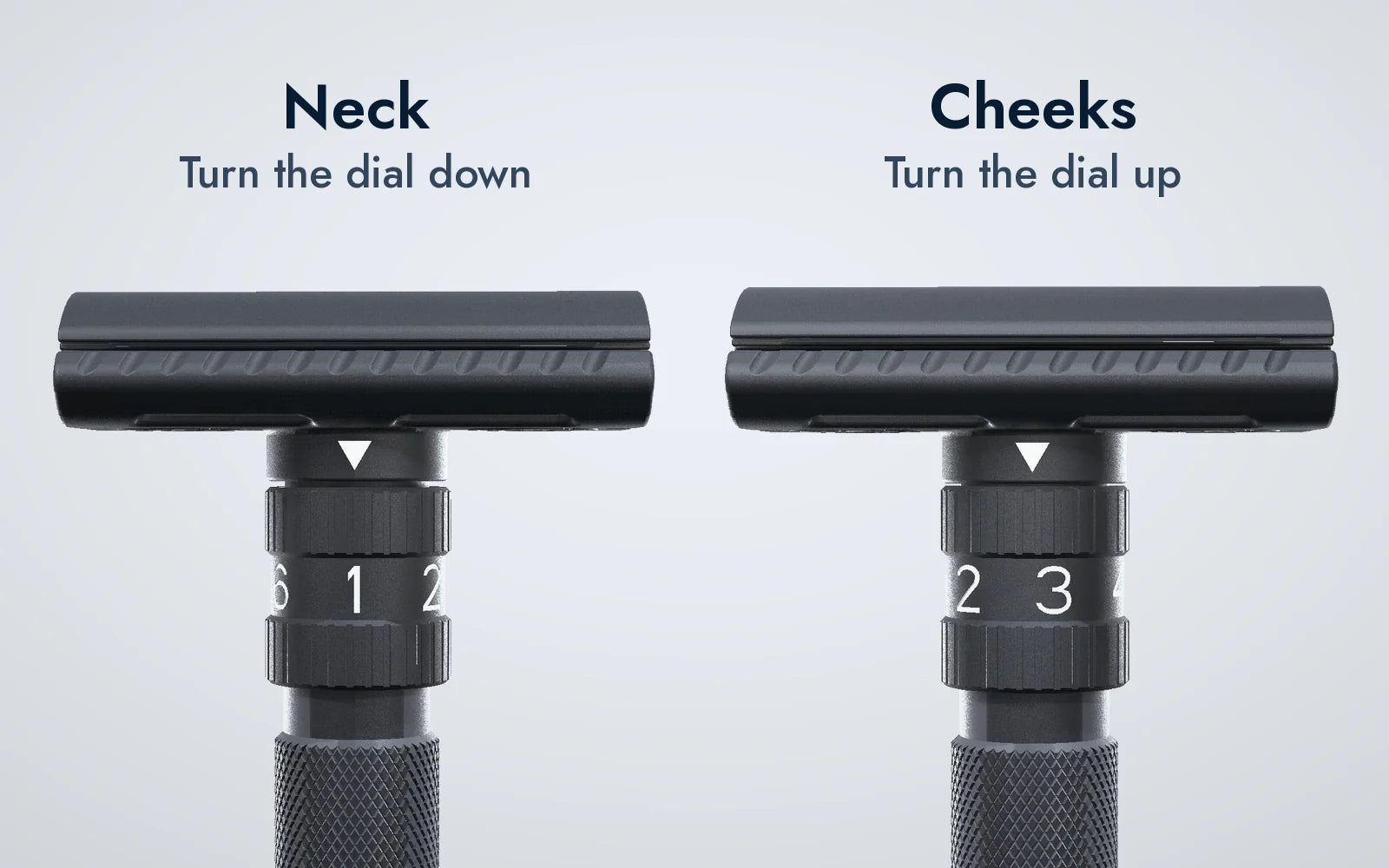
On SETPOINT™, our face map is a good starting point: neck at 1 (range 1–3), upper lip and chin at 2 (2–5), cheeks and jawline at 3 (3–6). Move up as stubble gets longer. On a 6C or 6S, start on plate 1 and move up a plate at a time.
Signs your setting is wrong
Too high (too aggressive):
- Redness or stinging straight after the shave
- Small nicks, especially on the neck or around the jaw
- You can feel the blade biting even with light pressure
Too low (too mild):
- Stubble left behind after a pass
- The razor drags or tugs instead of cutting cleanly
- You find yourself pressing harder or going back over the same spot
Hard-to-cut hair leads men to press harder and make more passes, which raises irritation (Maurer et al., 2016). A setting that's too mild can give you razor burn too, just by a different route. If you burn, check which side of the line you're on before you change anything. Our guide to why a safety razor can still give you razor burn walks through the other causes.
Why an adjustable gap helps sensitive skin
Your neck and cheeks rarely want the same setting. Cheek and neck skin react differently, neck hair often grows in several directions, and your stubble length changes from day to day. A fixed razor gives you one gap for all of it. An adjustable safety razor lets you shave the neck mild and the cheeks more efficiently. You can raise the gap for a three-day beard instead of pressing harder. More on that in the best razor for sensitive skin and our razor burn science page. Every Rockwell comes with 100-day free returns, no questions asked.